 Jan Hrcek
Head of the Laboratory of Experimental Ecology
Research Associate, University of Oxford
janhrcek@gmail.com
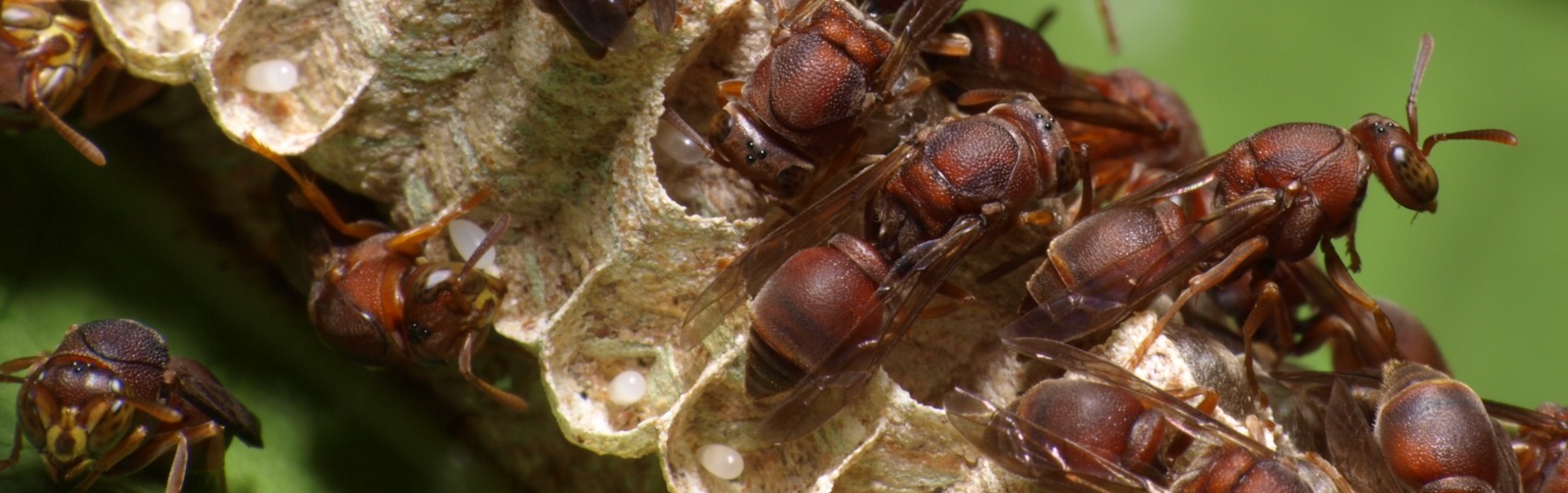
I am interested in ecology and evolution of interactions between insects and their parasites and in processes which govern dynamics of complex natural networks of these interactions. I'm building bridges between field community ecology, population genetics, and typical laboratory experiments with single interactions to allow deep mechanistic understanding of complex food webs.
I have described caterpillar-parasitoid food webs from the rainforests of New Guinea, pioneered the use of molecular tools for parasitoid detection and identification in complex food webs and contributed to global analyses of insect specialisation and distribution of symbiotic bacteria. I've shown that symbiotic bacteria protect hosts against parasitoids and pathogens under natural field conditions.
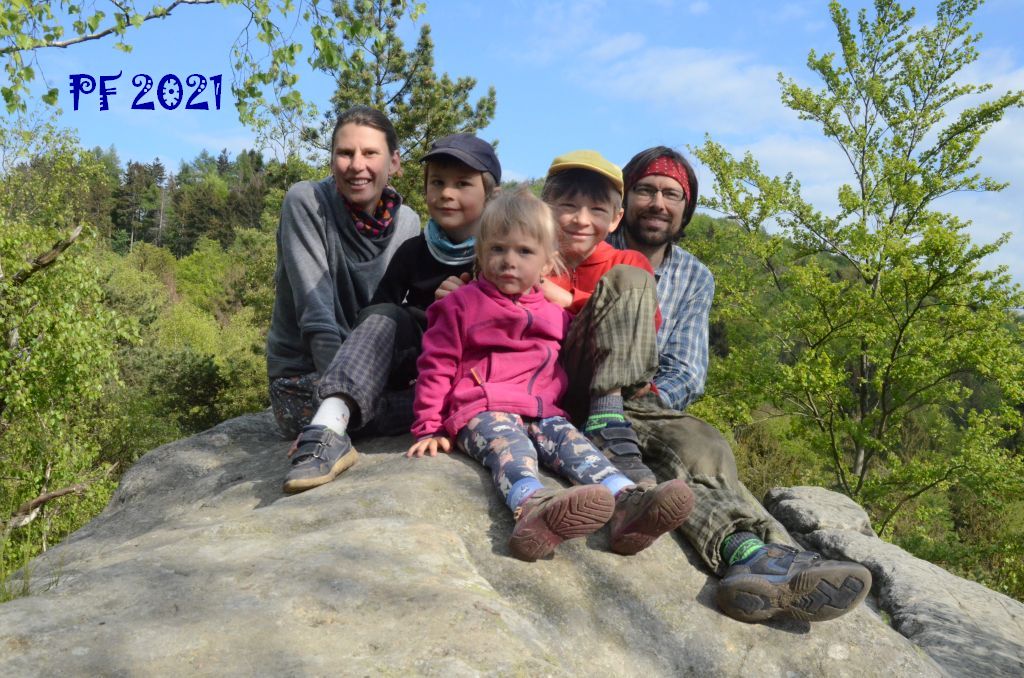
I also have an amazing wife and three children.
Education
2008 - 2012 Ph.D. in Zoology, University of South Bohemia,
Thesis: Caterpillar - parasitoid food webs in New Guinea rainforest,
Supervisor: Prof. Vojtech Novotny
Professional Appointments
2016 - current Head of the Laboratory of Experimental Ecology, Biology Centre, Czech Academy of Sciences
2018 - current Lecturer, Faculty of Science, University of South Bohemia
2016 - current Research Associate, University of Oxford
2013 - 2016 post-doc at Department of Zoology, University of Oxford, Charles Godfray lab
2012 - 2013 post-doc at University of South Bohemia, Vojtech Novotny lab
2012 one month research stay at University of Edinburgh, Graham Stone lab
2009 four months research stay at New Guinea Binatang Research Center, PNG
2006 - 2007 one year stay at New Guinea Binatang Research Center, PNG
(collecting data for M.Sc. and Ph.D. theses and working as station manager)
2006 - 2013 postgraduate fellowship at Biology Centre, Czech Academy of Sciences
Awards, Grants and Fellowships
PI of ERC-CZ grant from Czech Ministry of Education "Does variation beget stability?" (2020-2025); €1,602,000.
PI of Czech Science Foundation grant "Testing the link between the structure and resilience of ecological networks" (2020-2022); €331,000.
PI of Junior Czech Science Foundation grant "Impact of temperature on host-parasitoid food webs: role of immunity and symbiotic bacteria" (2017-2019); €415,000.
J.E. Purkyne Fellowship (2017-2021).
Project partner for molecular food web analysis on NERC (UK) grant "Ecological and evolutionary effects of climate change on rainforest food webs" PI Prof. Owen Lewis (2016-2019).
Otto Wichterle Award for exceptionally outstanding and promising young scientists at the Czech Academy of Sciences.
Selected publications
Google Scholar profile
ResearcherID profile
ResearchGate reprints
Hrcek, J., Parker, B.J., McLean, A.H.C., Simon, J-C., Mann, C.M. & Godfray, H.C.J. (2018) Hosts do not simply outsource pathogen
resistance to protective symbionts. Evolution, 72: 1488–1499.
Hrcek, J., McLean, A.H.C. & Godfray, H.C.J. (2016) Symbionts modify interactions between insects and natural enemies in the field. Journal of Animal Ecology, 85: 1605–1612.
McLean, A.H.C., Parker, B.J., Hrcek, J., Henry, L.M. & Godfray, H.C.J. (2016) Insect symbionts in food webs. Philosophical Transactions B, doi: 10.1098/rstb.2015.0325
Hrcek, J. & Godfray, H.C.J. (2015) What do molecular methods bring to host–parasitoid food webs? Trends in Parasitology, 31: 30-35.
Forister, M.L. et al. (2015) The global distribution of diet breadth in
insect herbivores. PNAS, 112: 442-447.
Volf, M., Hrcek, J., Julkunen-Tiitto, R. & Novotny, V. (2015) To each its own: differential response of specialist and generalist herbivores to plant defence in willows. Journal of Animal Ecology, 84: 1123–1132.
Hrcek, J., Miller, S.E., Whitfield, J.B., Shima, H. & Novotny, V. (2013) Parasitism rate, parasitoid community composition and host specificity on exposed and semi-concealed caterpillars from a tropical rainforest. Oecologia, 173: 521–532.
Hrcek, J., Miller, S.E., Quicke, D.L.J., & Smith, M.A. (2011) Molecular detection of trophic links in a complex insect host-parasitoid food web. Molecular Ecology Resources, 11: 786-794.
Editorial activities and reviews
Recommender (Associate Editor) for Peer Community in Ecology (2018-current).
Reviewed manuscripts for Molecular Ecology (6x), Ecology Letters (5x), Molecular Ecology Resources (3x), Insect Conservation and Diversity (3x), Biodiversity Data Journal (2x), Evolutionary Ecology (2x), Biological Control (2x), Philosophical Transactions B, Biological Reviews, Scientific reports, Ecological Entomology, Ecology and Evolution, FEMS Microbiology Ecology, Journal of Animal Ecology, and Journal of Applied Entomology.
Reviewed grant proposals for BBSRC UK, Hungarian Science Foundation, Estonian Science Foundation, Charles University Grant Agency and Grant Agency of University of South Bohemia.
Student supervision and teaching
Currently I supervise three PhD students at University of South Bohemia.
Teaching field courses in Entomology and Ecology, University of South Bohemia (2005-2012): 2x one week, 4x one day. Entomology practicals in Hymenoptera systematics, one day class.
Invited talks
University of Edinburgh (2016) Departmental seminar at Institute of Evolutionary Biology
Centre for Ecology & Hydrology, Wallingford (2016) Graduate seminar series
ETH Zurich (2015) Sinergia grant kick-off symposium
Conference talks
Royal Entomological Society, Insect endosymbiont meeting, University of Oxford, 2016:
"Protective symbiosis: does it really work in nature?"
European Society for Evolutionary Biology, University of Lausanne, 2015:
Endosymbiotic bacteria protect aphids against natural enemies in a natural wet meadow habitat.
BES Annual Meeting, University of Sheffield, 2011:
Molecular identification allows inclusion of predators into a plant-caterpillar-parasitoid food web.
International Congress of Entomology, Durban, South Africa, 2008:
Parasitoid communities attacking leaf chewing Lepidoptera in New Guinea rainforest.
Science communication and outreach
- active in outreach, offering and presenting talks on my research experience and leading field excursions. General public: 2x talks on rainforest research at a music festival (~300 and ~80 participants), talk in a local nature conservation club, talks at three primary schools, thirty minute radio interview in local radio on Papua New Guinea research experiments (Cesky Rozhlas Ceske Budejovice). Secondary schools: talks at four schools, one day field excursion, 2x ten days biological expedition to Corfu, 4x National Biology Olympiad training one day entomology excursion and talk, one day field excursion and talk for high school teachers. As a part of field excursions and talks I often include a hands-on multidisciplinary activity with gall ink making (ecology, chemistry, history & art).
- led a high school student project for two years under "Open Science" programme.
- selected by Vesmir, a Czech popular science magazine, for opening issue of a series of four page interviews with promising young Czech scientists, with two short videos [in Czech].
- one of my papers went viral because we named a new parasitic wasp species after a character from "Kill Bill" blockbuster.